Table of Contents
Introduction
Construction projects require proper planning, skilled workers, reliable equipment and effective management to achieve successful results. Every construction site has different requirements, and choosing the right machinery plays an important role in completing tasks efficiently. From excavation and material handling to lifting, grading and compaction, construction equipment helps workers perform demanding jobs with greater speed and accuracy.
Construction Site Productivity is one of the most important factors that determines whether a project can be completed within its planned schedule and budget. Using unsuitable machinery, outdated equipment or poorly maintained machines can create unnecessary delays, increase operating expenses and affect overall project performance.
For construction companies in the UAE, selecting the right machinery is especially important because projects often involve tight deadlines, challenging site conditions and demanding operational requirements. Having access to suitable heavy equipment can help contractors improve workflow, reduce manual effort and maintain consistent progress.
In this guide, we will explore how the right machinery can improve construction operations, reduce project delays and help contractors achieve better results.
1. Choose the Right Machinery for Every Construction Task
Every construction activity requires specific equipment. Using the correct machine for each task helps workers complete operations more efficiently while avoiding unnecessary effort and delays.
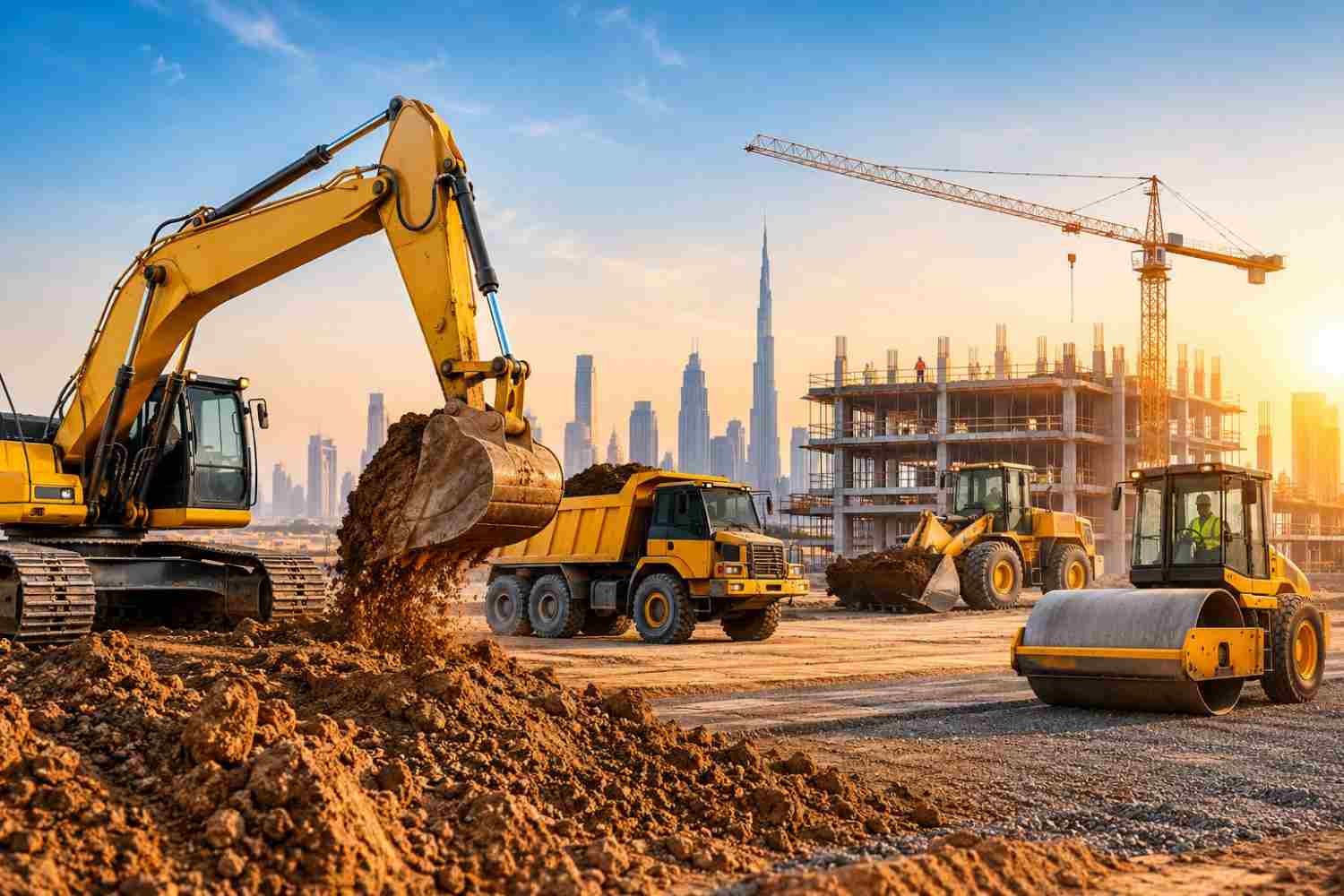
For example, excavators are commonly used for digging foundations, trenching and earthmoving activities. Wheel loaders help move and load materials, while bulldozers are suitable for pushing soil and clearing construction areas. Road rollers are used for compacting soil and asphalt, ensuring a stable surface.
Selecting machinery according to the project requirements can significantly improve Construction Site Productivity.
Before choosing equipment, contractors should consider:
- The type and size of the construction project.
- Ground conditions and site accessibility.
- Required lifting and loading capacity.
- Working space and operating limitations.
- Project deadlines and daily workload.
- Equipment availability and operating costs.
Using the right machinery for the right job helps reduce unnecessary machine movement, improve work quality and ensure that construction activities continue smoothly.
2. Improve Excavation and Earthmoving Operations
Excavation and earthmoving are essential activities in many construction projects. These operations often involve removing soil, preparing foundations, digging trenches and shifting large quantities of material.
Completing these tasks manually can require considerable time and labour. Heavy machinery makes the process faster and more efficient.
Excavators, backhoe loaders, bulldozers and dumper trucks are commonly used for different earthmoving requirements.
Excavators: Suitable for digging, trenching, foundation work and material handling.
Backhoe Loaders: Useful for digging, loading and smaller construction activities.
Bulldozers: Help push soil, clear land and level construction areas.
Dumper Trucks: Transport excavated soil, sand, gravel and other materials.
Using appropriate earthmoving machinery helps contractors manage large workloads and maintain a consistent construction schedule. Better coordination between excavation machines and transportation vehicles also prevents material-handling delays.
3. Use Material Handling Equipment to Save Time
Material handling is another important part of construction operations. Materials such as sand, gravel, cement, steel and construction debris need to be moved from one location to another throughout the project.
Without suitable machinery, material transportation can become time-consuming and physically demanding.
Wheel loaders, forklifts, telehandlers, cranes and dumper trucks help simplify material-handling activities.
For example, wheel loaders can move bulk materials quickly, while forklifts are useful for transporting palletised materials around warehouses and construction sites. Cranes can lift and position heavy materials at elevated locations.
Efficient material movement supports Construction Site Productivity by reducing waiting time and helping different teams continue their work without unnecessary interruptions.
Contractors should select material-handling equipment based on load capacity, lifting height, transportation distance and site conditions.
4. Improve Lifting Operations with the Right Cranes
Lifting heavy materials is a regular requirement in large construction and infrastructure projects. Steel structures, concrete components, machinery and other heavy materials often need to be lifted and positioned accurately.
Using suitable cranes helps contractors handle these operations safely and efficiently.
Different crane types are designed for different applications:
- Mobile Cranes: Suitable for lifting heavy materials at different locations.
- Crawler Cranes: Useful for heavy lifting operations on construction sites.
- Tower Cranes: Commonly used in high-rise building projects.
- HIAB Crane Trucks: Useful for loading, unloading and transporting materials.
Choosing the right crane depends on lifting capacity, required height, site accessibility, ground conditions and the weight of the load.
Proper lifting plans, trained operators and regular equipment inspections are also essential. These measures help minimise operational risks and avoid unnecessary delays.
5. Reduce Downtime Through Regular Equipment Maintenance
Equipment breakdowns can interrupt construction activities and affect project schedules. A machine that suddenly stops working may delay several connected operations, especially when other workers and equipment depend on it.
Regular maintenance helps keep machinery in good operating condition and reduces the possibility of unexpected breakdowns.
Construction companies should establish a maintenance schedule that includes:
- Checking engine oil and hydraulic fluid levels.
- Inspecting tyres, tracks and undercarriage components.
- Checking brakes, lights and safety systems.
- Inspecting hydraulic hoses and connections.
- Cleaning air filters and cooling systems.
- Identifying unusual noises or machine vibrations.
- Arranging professional servicing when required.
Operators should also complete basic pre-start inspections before using machinery.
Preventive maintenance supports Construction Site Productivity because well-maintained equipment can perform more consistently and reduce interruptions during important project activities.
Working with a reliable equipment rental provider can also help contractors access technical support and replacement arrangements when equipment issues occur.
6. Consider Equipment Rental Instead of Purchasing
Purchasing heavy machinery requires a significant financial investment. In addition to the initial purchase price, companies must consider maintenance, insurance, transportation, storage and depreciation expenses.
For many contractors, renting equipment can be a practical alternative, particularly when machinery is needed for a specific project or limited period.
Heavy equipment rental offers several advantages:
Lower Initial Investment: Contractors can access the machinery they need without purchasing expensive equipment.
Flexible Rental Periods: Equipment can be hired according to project requirements, whether for short-term or long-term operations.
Access to Different Machinery: Companies can select suitable equipment for different construction activities.
Reduced Ownership Responsibilities: Renting can reduce the responsibilities associated with long-term equipment ownership.
Better Resource Planning: Contractors can allocate their budgets towards other important project requirements.
For companies working on multiple projects, equipment rental can support Construction Site Productivity by making it easier to arrange machinery according to changing site requirements.
However, contractors should compare rental costs, equipment condition, service support and availability before selecting a rental provider.
7. Match Equipment Capacity with Project Requirements
Choosing machinery based only on availability or rental price can create operational problems. Equipment capacity must match the actual requirements of the construction activity.
For example, using an excavator that is too small for a large excavation project may increase the number of working cycles and extend completion time. Similarly, using a machine with excessive capacity for a small site can increase operating expenses without providing additional benefits.
- Excavator bucket capacity.
- Crane lifting capacity and working radius.
- Loader operating capacity.
- Dumper truck load capacity.
- Boom lift working height.
- Roller operating weight and compaction requirements.
Selecting equipment with appropriate specifications helps prevent overloading, unnecessary fuel consumption and inefficient operations.
A proper equipment selection process can make Construction Site Productivity more consistent by ensuring that machinery performs according to the project’s actual workload.
8. Improve Site Planning and Equipment Coordination
Even the most advanced machinery cannot deliver effective results without proper planning. Construction activities involve multiple teams, machines and materials working together.
Poor coordination can result in equipment waiting time, blocked access routes, material shortages and unnecessary movement around the site.
To avoid these issues, project managers should prepare a clear equipment deployment plan.
Important planning practices include:
- Assigning machinery to specific work areas.
- Scheduling equipment according to daily activities.
- Coordinating machine operators with site supervisors.
- Planning material delivery and transportation.
- Keeping access routes clear.
- Avoiding unnecessary movement between work areas.
- Monitoring machine usage and operating hours.
For example, excavation work should be coordinated with dumper truck availability to ensure that removed soil can be transported without delays.
Effective planning improves workflow and supports Construction Site Productivity throughout different stages of a project.
9. Focus on Operator Training and Workplace Safety
Heavy machinery requires trained and competent operators. Even suitable equipment may not perform effectively when operators lack the necessary experience or knowledge.
Proper operator training helps improve machine handling, reduce operating errors and maintain safer working conditions.
Construction companies should ensure that:
- Operators are appropriately qualified for the machinery they use.
- Daily equipment inspections are completed.
- Safety procedures are followed.
- Workers understand equipment operating limits.
- Warning signs and safety instructions are clearly displayed.
- Pedestrians and machinery have designated movement areas.
- Lifting operations follow approved safety procedures.
Regular safety training also helps workers recognise potential hazards and respond appropriately.
A safe construction environment supports Construction Site Productivity by reducing avoidable incidents, operational interruptions and equipment-related risks.
10. Use Modern Machinery for Better Operational Efficiency
Technology and modern equipment have changed the way construction projects are managed. Newer machinery may offer improved fuel efficiency, enhanced operator comfort, better controls and advanced monitoring features.
Depending on the equipment type, useful technologies can include GPS tracking, telematics, digital operating displays and machine performance monitoring.
These features help contractors understand equipment utilisation, monitor operating hours and identify maintenance requirements.
Modern machinery can also provide improved accuracy in activities such as grading, excavation and material placement.
However, contractors should evaluate the actual project requirements before choosing advanced equipment. The most suitable machine is not necessarily the newest or most expensive one; it is the machine that delivers the right performance for the job.
Making informed equipment decisions helps improve Construction Site Productivity while supporting better resource management.
11. Monitor Equipment Performance and Fuel Consumption
Fuel and operating costs can have a considerable impact on construction budgets. Poor machine utilisation, unnecessary idling and unsuitable equipment selection can increase fuel consumption.
Monitoring equipment performance helps contractors identify areas where improvements are needed.
Some useful practices include:
- Recording daily machine operating hours.
- Monitoring fuel consumption.
- Reducing unnecessary engine idling.
- Scheduling work to minimise empty machine movements.
- Checking equipment performance regularly.
- Assigning suitable machines to specific activities.
- Reviewing maintenance and service records.
For example, using an appropriately sized wheel loader for material-handling operations can help reduce unnecessary fuel usage compared with using oversized machinery.
Monitoring these factors allows construction companies to make informed decisions and improve Construction Site Productivity without increasing unnecessary operating expenses.
12. Partner with a Reliable Heavy Equipment Rental Company
Choosing the right machinery is only one part of successful construction management. Contractors also need a dependable equipment rental partner who understands project requirements and can provide suitable machinery when required.
A professional rental company can help contractors identify appropriate equipment, arrange machinery delivery and support equipment-related requirements throughout the rental period.
Before selecting a rental provider, consider the following:
- Availability of required machinery.
- Equipment condition and maintenance history.
- Operator and technical support availability.
- Rental terms and pricing transparency.
- Delivery and collection arrangements.
- Response time for equipment-related issues.
- Safety documentation and certifications.
Working with an experienced rental provider can make equipment planning easier and reduce the pressure associated with managing a large machinery fleet.
Why Choose Arabian Equipment & Machinery Rental LLC?
Arabian Equipment & Machinery Rental LLC provides heavy equipment and machinery rental solutions for construction, infrastructure and industrial requirements across the UAE.
With experience in the equipment rental industry since 1999, the company supports contractors and businesses with a range of machinery for different project applications.
From earthmoving and excavation to lifting, material handling and construction support, selecting suitable machinery is important for maintaining efficient site operations.
Arabian Rental focuses on providing equipment rental solutions that help businesses access the machinery required for their projects.
Whether contractors need excavators, loaders, cranes, rollers or other heavy equipment, choosing a suitable rental solution can help simplify project planning and equipment management.
For construction companies looking for reliable machinery rental solutions in the UAE, Arabian Equipment & Machinery Rental LLC is a partner worth considering.
Conclusion
Successful construction projects depend on effective planning, skilled workers, suitable machinery and consistent equipment performance. Choosing the right equipment for each activity helps contractors complete tasks efficiently, manage resources and reduce unnecessary delays.
From excavation and earthmoving to lifting, compaction and material handling, every machine has a specific role in construction operations. Regular maintenance, operator training, equipment coordination and proper capacity selection are equally important for achieving better results.
Improving Construction Site Productivity is not simply about using more machinery. It is about selecting the right equipment, using it effectively and ensuring that every construction activity is properly coordinated.
For contractors in the UAE, partnering with an experienced heavy equipment rental company can make accessing suitable machinery easier and more flexible.
Choose the right machinery, plan your operations effectively and keep your construction projects moving forward with Arabian Equipment & Machinery Rental LLC.